
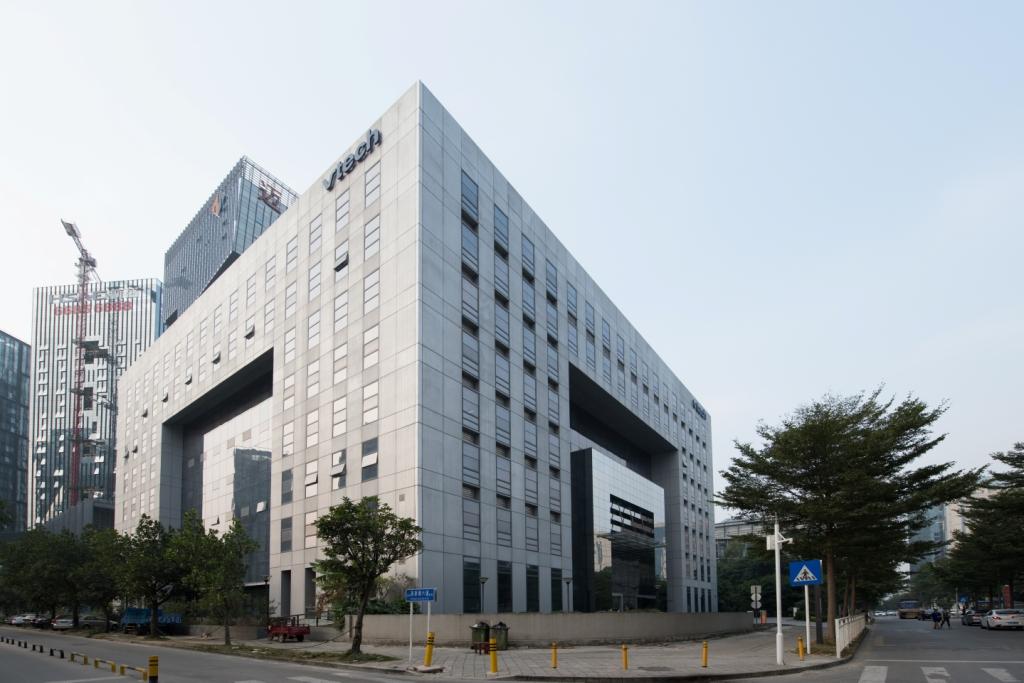
As part of our EMS Special Assignment project, EMSNOW visited all of VTech CMS’ global facilities and their NPI Center in China. As part of that tour, we conducted an on-location interview while in Shenzhen, China with VTech CMS’ forward-thinking CEO Andy Leung. The transcript of that interview appears in this space in two parts. Below is Part Two. Here’s the link to Part One.
EMSNOW: Let’s discuss growth strategies, both organic and inorganic. You’ve already mentioned the acquisitions you did in Malaysia and Mexico. When you look at your current footprint, do you see a need for additional locations elsewhere in the future?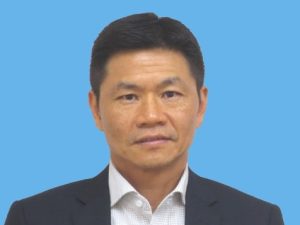
Andy Leung: Our growth has been mostly organic because we believe sustaining our customer-focused culture is easier through organic growth. It’s challenging to maintain this culture across different manufacturing sites.
We do selective acquisitions for strategic reasons: to acquire technology, to expand our global footprint, or to enter new business areas.
For example, the Malaysia Pioneer factory acquisition was primarily to expand our global footprint. Pioneer only spoke to us at that time because they knew our intention was to grow that facility further and not sell it.
The Tecate, Mexico factory acquisition was to enter the wooden electronic speaker manufacturing sector.
We do not make acquisitions solely for revenue growth. Currently, our two manufacturing sites outside China are sufficient to handle the US tariff issues.
I am hearing more about onshore manufacturing requirements, which interestingly are not primarily geopolitical. During COVID, logistical challenges became critical:
- Container shipping was disrupted
- Transportation times were long
- Logistics costs skyrocketed
- Customers couldn’t predict product delivery times
These challenges, not political tensions, are driving the onshore manufacturing trend. Customers want to avoid situations where their market is in one region, but manufacturing is disrupted by pandemics or political issues.
I think the US will keep asking for onshore manufacturing in North America. A similar case happened in Europe. That’s why we’re looking into potential acquisition targets in Eastern Europe. But we’re not in a hurry.
EMSNOW: I appreciate your comments on onshore manufacturing, which leads me to my next question about an industry trend: reshoring. How do you view this trend? Are you experiencing it in your Malaysia and Mexico facilities? People often cite the desire for a “China plus one” strategy.
Andy Leung: In fact, 80% of our current customers are requesting alternative manufacturing sites. If we don’t offer them an alternative manufacturing site in Malaysia or Mexico, they’ll likely move half of our business away to competitors who can offer such options.
However, once we offer this manufacturing site, they may not actually use it and might continue manufacturing in China. I think the primary reason is to fulfill a requirement from their management or customers. They have to do it.
But once they set up a production line elsewhere, they will have fulfilled their requirement. And they all know that manufacturing in China is still the best. So, once they have a contingency in place, they’ll keep almost everything still in China.
The exception is for products with more than 25% tariffs, but fortunately, not all of our current products fall into that category.
EMSNOW: Another important industry issue is sustainability. I see you have KPIs in this area that you’re managing to, and you’ve been doing this for a while at VTech CMS. What is the importance of sustainability to your customers and to your business?
Andy Leung: People started talking about corporate social responsibility (CSR) 10 or 15 years ago. We implemented CSR in 2010. By 2012, management believed this was important and would become a requirement for listed companies.
In 2014, we set up a five-year plan with clear objectives in environmental, social, corporate governance, and people-related areas. The listing requirements started around two years ago, which means we were 8 years ahead of the requirement.
Our motivation wasn’t customer requirements or listing rules. Our management felt that when we generate money from the community through our operations, we have a responsibility to do something for the environment and society. We definitely need to take care of the people.
We’ve been recognized by MSCI (Morgan Stanley Capital International) sustainability indices. We’ve received certifications from various third parties confirming we’re on track with sustainability.
Commercially, this benefits customers by allowing them to tell the world they’re working with a sustainability-focused company. More importantly, because we’re genuinely committed to these areas, customers feel their products come from a worker-friendly and environmentally friendly company, which helps them explain this to their management and end customers. That will put them in a better competitive position.
EMSNOW: It sounds like, from speaking with your senior managers, you manage this not just as a checkbox exercise, but as a better way of doing business that can generate efficiencies and savings.
Andy Leung: It is a byproduct. I keep telling my people that our sustainability KPIs are not just about measuring and reporting figures. We need to manage these figures proactively. When we manage indicators like electric power utilization and product weight, the process itself benefits the company and its P&L. That’s is why I say it is a byproduct.
We’re not doing this primarily for savings, but to do something better for the environment and society. The benefits come automatically, along with an improved reputation.
EMSNOW: You have an Industry 4.0 lab and are moving towards smart factories. Within the EMS industry, there’s a balance between automation and human workers. How do you approach this balance?
Andy Leung: There’s no real balance – we should focus entirely on automation. About 20 years ago, when China started experiencing labor shortages, managers would tell me we couldn’t fulfill customer requirements due to labor issues. I did not want to hear that, so I told them I would allow unlimited machinery investment. Don’t come back and tell me that you cannot do the job due to missing labor. Under one condition: the payback period must be within 5 years. In fact, most investments had a payback period of just 3 years.
This helped us develop an automation culture. Since we’re a medium-mix, medium-volume manufacturer – unlike Tier 1 companies producing millions of a single product – we need some balance. Not everything can be fully automated.
I instructed our engineers that before putting a labor into the process, think about automation first. Only if a process absolutely cannot be automated will I allow human labor. It’s about setting guidelines and direction.
EMSNOW: One of your managing directors mentioned focusing on automating processes, not just products – looking at critical, repetitive processes that can be automated cost-effectively.
Andy Leung: Automation offers several benefits:
- Better quality (machines don’t make mistakes if set up correctly)
- Stable output
- Cost savings (we’ve grown revenue 2-3 times in 10 years with the same number of workers)
We also try to create career paths for workers, moving them from simple jobs to machine operation for better job satisfaction.
EMSNOW: What about artificial intelligence? How do you see AI benefiting VTech’s operations?
Andy Leung: We don’t see much AI application at present, but we recognize it’s a growing trend for improving factory efficiency. A few potential areas I see are:
Predictive Machine Maintenance. Previously, we tracked machine running times on paper. With AI, machines can automatically log running times, compare them against big data averages, and then point out the area that will most likely fail within a certain period of time.
Then there is the Customer Experience. We have customer portals where clients can access production status and interact with our systems. We can input this data into the system, which will then fine-tune material planning and other processes. We have a customer portal, but the level of automation needs further improvement. Customers can’t see everything because our system contains information from multiple customers that cannot be isolated. We must be careful about opening our data to avoid exposing one customer’s information to another.
Another AI application is continuously collecting production line output data and feeding it back to our ERP system. This helps in calculating and scheduling material delivery and production kitting. We’re more than halfway through implementing this approach, which will prevent many human planning mistakes.
EMSNOW: How have your customer relationships or their demands changed over the years?
Andy Leung: We have many happy customers. Last year, we received nine “best supplier” awards, which we didn’t even ask for – customers spontaneously recognized our performance.
Customer demands haven’t changed dramatically. There’s an endless demand for flexibility in forecasting, which is part of our daily operations. When addressing customer demands, we don’t just take their statements at face value. We try to understand the real reasons behind their requests.
For example, when a customer wants to reduce forecast commitment, the underlying reason might be that their own customers keep changing forecasts. Instead of rigidly adhering to 9-12 week commitments, we propose sharing end-customer demand information and adjusting plans accordingly.
We’ve found solutions like pre-ordering critical components. We negotiate terms with suppliers, committing to take what we order but requesting delivery flexibility. Most manufacturers appreciate this approach, as they’re concerned about order cancellations without compensation.
EMSNOW: Looking to the future, how do you view the EMS industry in 2025? What are the key drivers?
Andy Leung: The major drivers will be global economic conditions and anything related to 5G-related technologies, including servers and automotive applications.
Many companies are focusing on AI-driven technologies. This is an area of growth, though our specific company isn’t deeply involved in this area.
In 2025, I don’t think the economy will improve. Most customer forecasts suggest they’ll try to maintain 2024 levels. Predicting beyond 2025 is difficult.
Traditionally, demand followed the global economy. Now, political considerations are added, which are completely outside the control of industry players. However, I believe that EMS remains a growing industry.
In the first nine months, an MMI report showed the top 6 contract manufacturers listed in the US experienced double-digit revenue declines. This illustrates the current industry situation.
EMSNOW: Last question – how prepared is VTech CMS for the next growth phase?
Andy Leung: We’ll continue our existing business strategy of customer focus. In the EMS industry, the primary customer selection criterion is being easy to do business with. You can’t do business with an unhappy customer.
This has been the cornerstone of our success, and we believe it will continue to be. Our growth can be maintained but slower due to geopolitical issues. To mitigate this, we’ll:
- Expand our global footprint
- Stay attuned to future EMS industry trends
- Offer Original Design Manufacturer (ODM) services to existing customers
We’ll proactively explore ODM requirements. Most customers have their own design plans but won’t entirely avoid ODM solutions. This could help bypass some geopolitical impacts.
EMSNOW: The ODM approach could involve sub-assemblies for larger products, leveraging the specific product capabilities you’ve demonstrated.
Andy Leung: Exactly.
EMSNOW: You seem well-positioned for future demand growth, with an impressive balance of automation and a philosophy that seems ready to adapt to market changes.
Andy Leung: Thank you.