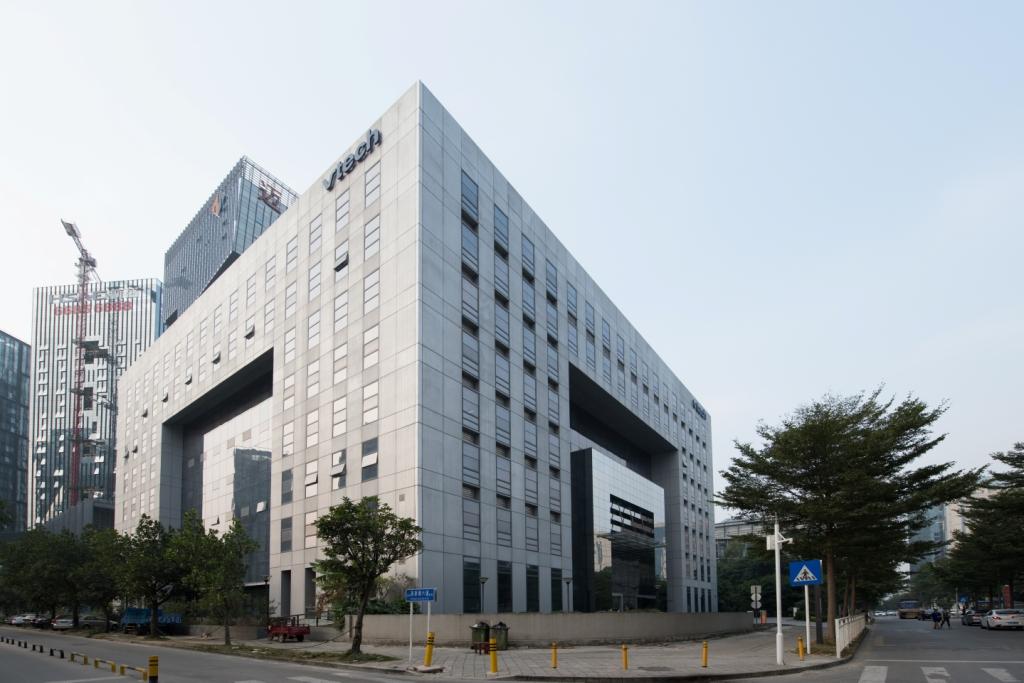
As part of our EMS Special Assignment project, EMSNOW visited all of VTech CMS’ global facilities and their NPI Center in China. As part of that tour, we conducted an on-location interview while in Shenzhen, China with VTech CMS’ forward-thinking CEO Andy Leung. The transcript of that interview will appear in this space in two parts. Here is Part One. Here’s the link to Part Two.
EMSNOW: I would like to do this interview in three parts: Let’s first talk about VTech CMS, its history and current configuration; then discuss your goals for the future; and then I’d like to get your perspective on some industry issues and trends. Let’s begin with the first part about VTech CMS. Please introduce yourself, your history with VTech, and your current role with the company.
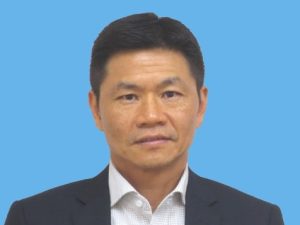 Andy Leung: I joined VTech in 1988, and I still remember starting as an engineer. In fact, I was one of the early design engineers for the telephone division. In 1993, the contract manufacturing business separated from the telephone and educational learning divisions. At that time, our contract manufacturing revenue was around $25 million.
In 2002, I was promoted to CEO of the business. From 2002, we successfully grew CMS to become a $1 billion company by fiscal year 2024. During this period, we encountered several challenges. In 2008, during the global financial crisis, the overall EMS (Electronic Manufacturing Services) industry was declining by 30-40%, but VTech CMS managed to maintain and grow.
More recently, we’ve survived the COVID pandemic and global material shortages. We’ve been able to maintain growth over the years because we’ve developed a strong reputation in the EMS industry. We don’t need to actively seek business – new customers approach us due to our reputation.
Our key strategy is customer focus. We differentiate ourselves by executing this strategy through our organizational structure. As we’ve grown from a $25 million to a $1 billion company, we’ve adapted by dividing our operations into Strategic Business Units (SBUs).
 Each SBU has its own people, factory, and is responsible for its own profit and loss. We’ve set criteria that each unit should not exceed $200 million in revenue and have no more than 10 active customers. This allows management to spend sufficient time focusing on customer needs. As the company grows we will set up more SBUs.
The only year we experienced a revenue decline was 2022, primarily due to global material shortages – we had orders but couldn’t fulfill them due to material constraints.
Currently, I’m the executive director of the entire VTech Group and a Board Member and still hold the CEO position for the contract manufacturing division. Our executive group consists of three directors, which makes decision-making efficient.
EMSNOW: What do you consider the major milestones in the development of the CMS division since its founding in 1993?
Andy Leung: One major milestone was obtaining the ISO 9000 certificate in 1994. At the time, we were the first company in the region to receive this certification, which was a significant achievement back then.
The second milestone relates to our acquisitions. Before the tensions between the US and China, we recognized the need to offer alternative manufacturing sites as a contingency plan for our customers. Starting around 2014-2015, we began looking for alternative manufacturing locations. In 2018, we acquired the Pioneer factory in Malaysia.
When we acquired the factory, its revenue was around $60 million. We purchased the factory along with the business. We’ve successfully grown that to $170 million by 2024. We also extended our footprint in Tecate, Mexico in 2021.
We continuously review how to upgrade ourselves and stay ahead of industry trends. We anticipated labor challenges in China as the economy developed. So we started focusing on process automation with a single goal: reducing labor dependency. After implementing this strategy, we’ve grown company revenue by 3-4 times while maintaining the same number of employees. This demonstrates how we proactively stay ahead of EMS industry trends.
Another significant initiative is our NPI (New Product Introduction) Center. It is dedicated to offering new product introduction services, particularly for startups in the Greater Bay Area of China, including Dongguan, Shenzhen, Zhuhai, Hong Kong, and Macau. In the past decade, many high-tech startups have emerged here, focusing on converting design concepts into products.
About six years ago, we believed that by offering new product introduction services to these startups, we could build our customer base from the very beginning. In fact, quite a few of our current customers originated from this approach.
We also started discussing Industrial 4.0 around 2016-2018, not because of customer requirements, but because we believed the EMS industry would rely on technology to improve efficiency and customer experience. Our objective was to create a platform that could collect manufacturing data, analyze it, and automatically improve systems.
To implement this, we purchased a platform and employed consultants from a company spun off from Foxconn. We’re now in the final stages of implementation and starting to enjoy the benefits. Our teams are learning to use the platform to improve systems automatically, going beyond just displaying data.
EMSNOW: That has been the big challenge with Industry 4.0. When I speak to EMS companies, I hear that they are familiar with the concept but have not really seen the case study yet of where it actually works. That is what impressed me yesterday when I met with your I4 Lab people and the work they are doing. You are actually achieving part of the goal of Industry 4.0.
Andy Leung: Implementing Industrial 4.0 requires significant preparation. You need to replace old machines with new ones that have the latest I/O ports to output data to the system. The system then analyzes data and can feedback instructions to change machine settings. This involves substantial investment and training to change mindsets – moving away from paper-based processes to relying on platform recommendations.
We’ve also been working on process automation for the past 20 years. Our I4.0 laboratory has fabricated approximately 80% of our automation setups that were done in-house. This approach ensures we deeply understand our own requirements; you can’t achieve this type of harmony by outsourcing to third-party machine builders.
EMSNOW: As part of the VTech Group, do you derive any benefits from being part of the parent company, such as shared resources or purchasing power with suppliers?
Andy Leung: There are many benefits. The first benefit is financial support. While each company in the VTech Group operates independently, we share financial resources. The VTech Group is very profitable and generates positive cash flow annually.
When contract manufacturing started in 1993 with just $25 million in revenue, we relied on the group to provide sufficient financial support to grow and run the company. We are supported by a financially sound parent company.
The second benefit is overall procurement power. This is very important. When we combine the entire VTech Group, we are the number one electronic company in Hong Kong. All the component companies in Hong Kong consider VTech as their biggest customer, and we can always get the best terms and conditions. During critical supply situations, material suppliers in Hong Kong consider VTech for larger component allocations. The allocation dynamics differ across Asia Pacific, Europe, and the US. We receive significant purchasing priority when combining the whole VTech group.
Another area of benefit is sharing manufacturing know-how. For example, the telephone division is strong in wireless technology design. Our engineers can consult with them to gain knowledge for serving customers with wireless-related products. Similarly, with the toy division, we share plastic molding technology and tooling fabrication expertise.
EMSNOW: There are many EMS companies in the world. How does VTech CMS differentiate itself from the competition?
Andy Leung: We’re not a price leader, but we are price competitive. If a customer’s target price is $8, we might offer $7.50. Our major differentiation is not pricing, but our customer-focused approach. Customers love doing business with us because we’re easy to work with, communicate effectively, and consistently deliver results.
In fact, the thing I am most proud of about CMS is that we’ve never lost a single customer due to performance issues. This is the major differentiation from other EMS. We’re also quick to detect and adapt to EMS industry trends, staying ahead in areas like industrial performance, process automation, and new product introduction services.
EMSNOW: Since becoming CEO in 2002, what are you most proud of?
Andy Leung: I’m most proud of maintaining consecutive growth for 19 years. Another point, as I just mentioned, is that we have never lost a single customer due to our performance. We’ve developed an excellent industry reputation to the point where, before recent geopolitical conflicts, we were in a position to select the customers to work with that were approaching us.
EMSNOW: As an Asia-based manufacturer, are there benefits from the material supply chain with so many component manufacturers located in this region?
Andy Leung: I don’t think so. In the EMS industry, there are three types of materials:
1. Commodity components (capacitors, resistors)
2. Critical components (MCU, memory, controllers)
3. Custom-made items (plastic and metal)
For the first two categories, most of the manufacturers are global companies, so regional location doesn’t significantly impact the supply chain. For the commodity items, procurement power of individual EMS providers may have impact to the pricing and supply allocations. However, for the critical components, pricing and allocations are largely determined when the product owner designs the component into their product. The EMS provider’s influence is limited. During critical supply situations, we must work directly with customers to negotiate with manufacturers.
For custom items like metal and plastic, being an Asian-based company allows us to easily access custom manufacturers in this region, which is the most competitive in the world. We can source the best quality at the best pricing for these items.
EMSNOW: Let’s discuss the future of VTech CMS. What are your thoughts on the next phase of your growth and evolution?
Andy Leung: Our growth in recent years has been driven by two primary factors:
1. Growth from current customers: Most of our customers are industry leaders in areas like professional audio and power amplifiers. When the economy is strong, these leaders place more orders. However, this growth fluctuates with the global economic cycle.
2. Reputation-driven growth: Our strong reputation in the EMS industry means that when employees from our current customers move to new companies, they often bring business with them. This has been a major growth driver in past years.
However, this reputation-driven growth is reducing due to tensions between the US and China. Quite a few new customers don’t recognize the difference between Hong Kong and mainland China. We need to spend effort explaining the policy of “One country two systems” to customers in order for them to put us into their preferred suppliers lists.
If the current situation remains unchanged, our growth will be maintained but at a reduced rate unless we change our business model or approach. Apart from the political issues, if the tension between China and the US were to disappear tomorrow, then I believe the future of CMS would be to maintain growth well into the future.
EMSNOW: Can you elaborate on the differences between Hong Kong and China, especially as perceived by Western media?
Andy Leung: Unfortunately, Western media tends to conflate Hong Kong and China. While Hong Kong is technically part of China, operationally and commercially, we are very different:
· We remain free to do business globally with minimal influence from China.
· Hong Kong still uses Western Common Law, while China uses continental law.
· We have our own currency, pegged to the US dollar. The HK dollar is very stable.
· A clear border exists between Hong Kong and China, requiring passports to cross.
· The 50-year unchanged agreement is still maintained, and I believe our independence will extend beyond that period.
EMSNOW: I noticed I didn’t need a visa for Hong Kong but did need one to enter China, which underscores the separation.
What new market sectors might you be pursuing moving forward?
Andy Leung: As a contract manufacturer you don’t always have much choice on the products you build. As long as the product itself is more electronics in content we’re open to serving any customer. However, we have more expertise in certain areas like Professional Audio and we will remain focused on this sector.
Another area we want to give more attention is Medical and Health Products: We’re interested in this area not just for potential higher margins, but because customers in this sector tend to have more committed business relationships.
We avoid pure consumer type products like notebooks and mobile phones. Instead, we prefer medium-mix, medium-volume products where customers demand more personalized experience and close commitment with management focus. Most customers approach us after failing to get flexibility or satisfactory service from their existing contract manufacturers.
In the second part of this interview, EMSNOW discusses Andy Leung’s growth strategies, industry trends, the importance he places on Sustainability, AI, his views on the work force of the future, and more. Be sure and check back tomorrow for this important interview.