



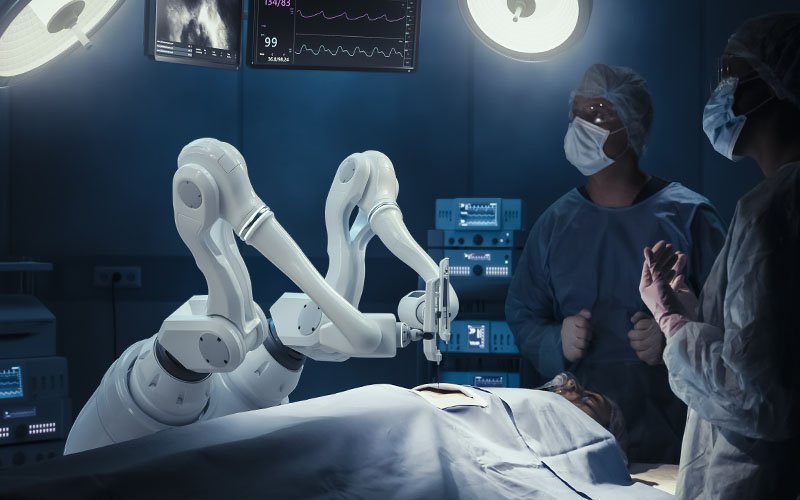
Robotics is no longer a futuristic concept. It’s here, transforming industries from manufacturing common household items to assisting doctors in medical operation rooms. At the center of this evolution is a critical interface: the display. These screens do far more than show data; they enable intuitive control, deliver real-time feedback, while withstanding operational environments where robotics is utilized. For engineers, selecting the right display technology is critical to ensure reliability and performance.
Why Displays Are Mission-Critical
Displays are the human-machine handshake. They provide operators with diagnostics, status updates, and interactive controls. As robots take on more complex roles, whether in industrial automation or autonomous navigation, the expectations for display technology have grown significantly.
Design Priorities for Robotic Displays

Built for Harsh Conditions
Robots often work where vibration, impact, dust and moisture are constant. Displays for this environment should adhere to MIL-STD-810G for shock and vibration resilience and carry IP65 or higher ingress protection for dust and water. Scratch-resistant surfaces and sealed housings protect sensitive electronics from environmental hazards.
Touch Interfaces That Work Anywhere
Capacitive touchscreens dominate the consumer space, but in robotics, capacitive type gloves would need to be used to properly interact with the display. A more robust type of touch technology is resistive touch. This allows standard gloves to be used, and the display can maintain proper protection against environmental contamination.
Clarity Under Pressure
Precision tasks demand sharp visuals. High-definition or 4K displays allow operators to monitor fine details, while brightness levels above 1,000 nits and anti-glare coatings keep screens readable in outdoor (daylight) or high-light environments.
Temperature and Power Efficiency
Industrial robots face extremes. Displays rated for -20°C to +70°C maintain performance without compromise. Energy-efficient architectures, such as LED backlighting and OLED, help conserve power, critical for battery-driven systems.
Connectivity That Counts
Modern robotics requires displays that process and share data. Ethernet, serial ports and wireless options like Wi-Fi and Bluetooth enable integration with control systems and remote monitoring platforms.
What’s Next for Robotic Displays
- Augmented Reality (AR): Displays are evolving into dynamic hubs, overlaying real-time analytics and guidance for complex tasks.
- Flexible Form Factors: Curved and modular designs allow engineers to optimize ergonomics without sacrificing functionality.
Applications Across Robotics
- Industrial: Real-time sensor data and diagnostics for automated systems
- Autonomous Vehicles: Navigation and environmental information for the remote operators on drones and self-driving platforms
- Medical: High-resolution imaging and surgical guidance
- Service & Hospitality: Interactive touchscreens for customer engagement
As robotics integrates AI and edge computing, displays will serve as adaptive control centers for real-time decision-making. For engineers designing next-generation systems, understanding these requirements and leveraging the latest display innovations will be key to delivering solutions that perform reliably in any environment.