

By Bruno Racault, President & CEO, ALL Circuits
The numbers tell one story. The reality on the ground tells another.

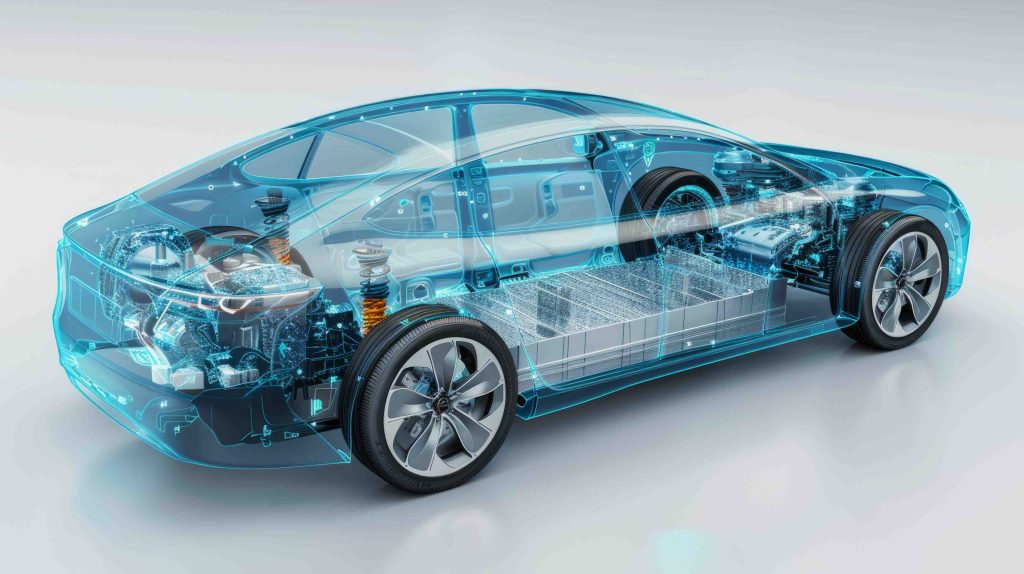
EV and hybrid vehicles now account for 60% of new car sales in Europe. That is not a projection or an aspiration, it is the market as it exists today. For anyone who has spent the last decade watching the automotive industry agonise over the pace of electrification, that figure should settle the debate. The transition is not coming. It has arrived.
But here is what the headline number does not tell you. Most of those EVs are not being built by European manufacturers. American and an ever increasing number of Chinese brands are capturing the growth. And that changes everything for European suppliers trying to calculate how much of the EV opportunity they can actually reach.
For EMS providers like ALL Circuits, the EV transition is simultaneously the most significant opportunity of our generation and the source of the most complex risk we have ever had to manage. Understanding why requires looking not just at what is growing, but at what is disappearing.
The Butterfly Effect Nobody Is Talking About
The thermal engine supply chain is not winding down gracefully. It is fragmenting. Suppliers who built their entire business around internal combustion, components, sub-assemblies, specialised manufacturing processes, are finding that their market is evaporating faster than their ability to pivot. Some will adapt. Many will not.
This creates a butterfly effect. When a tier-two or tier-three supplier in the thermal ecosystem fails, the consequences do not stay contained. They ripple outward through customer relationships, through component availability, through the financial health of businesses that depend on that supplier being there. For an EMS provider working with traditional automotive customers, this is not an abstract risk. It is a live one, and it requires constant attention.
The practical implication for us is that we cannot simply celebrate the growth in EV electronics content and assume it flows automatically to European EMS providers with strong automotive credentials. We have to be selective about which customers and which programmes we commit to, because not every automotive relationship that looks solid today will still be solid in three years.
What OEMs Actually Want Now
Something more fundamental has changed in how automotive OEMs relate to their EMS partners, and it goes beyond the technology transition.
Car manufacturers built their identity, and their margin, around the internal combustion engine. That was their core competency: the engineering, the manufacturing, the continuous improvement of something mechanically complex and proprietary. With electrification, that anchor is gone. The motor is simpler. The software is more important. And the electronics — the battery management systems, the inverters, the control boards — have become the new battleground for differentiation.
OEMs are responding by pulling electronics closer. They want to understand the manufacturing process, not just receive a finished board. They want DfX support. They want DfM (design for manufacturing) guidance that lets them iterate quickly without waiting six weeks for a shipment from the other side of the world. They want a partner who can teach and guide them, not just supply them.
This is where proximity becomes a genuine competitive advantage rather than just a geographic convenience. We have worked with EV customers where the decision to manufacture locally in Europe, rather than in China, was driven precisely by this: the speed of iteration, the quality of support, the ability to sit in the same room and solve a problem the same week it emerges. The cost differential with Asia narrows considerably once you account for what that proximity is actually worth.
Learning Humility — and Bringing Something in Return
I want to be direct about something that is not always easy for European manufacturers to say. Thirty years ago, European and American companies were teaching the world how to manufacture electronics. Today, in many respects, China is teaching us. The automation levels, the process discipline, the cost efficiency achieved in high-volume Asian manufacturing are benchmarks that we in Europe need to take seriously and learn from.
The merger with DBG Technology has given us a front-row seat to that reality. Our plant managers have visited DBG facilities in China and come back with a completely different understanding of what is possible. That is not always comfortable, but it is exactly what we needed.
But the relationship cannot be one-directional. What European EMS providers bring to the partnership, and what we bring to our customers, is something different from execution at scale. It is the ability to innovate around a customer’s specific problem, to qualify components for demanding automotive applications, to navigate the regulatory and quality requirements of the European market, and to generate the kind of ideas that pure execution culture does not always produce. The opportunity is to combine both strengths rather than compete with one while ignoring the other.
Where This Leaves Us
Nobody knows which car, or even which car maker, will be the market winner in five years. Nobody knows whether the consolidation among European OEMs will accelerate or stabilise. What we know is that EV is the dominant technology for at least the next decade, that electronics content per vehicle will continue to grow, and that the EMS providers who thrive in this environment will be the ones who have built the agility to respond to whatever comes next rather than betting everything on a single forecast.
For ALL Circuits, that means a global footprint that can manufacture at the continental level, Europe, Americas, and Asia, so that wherever our customers need us, we are already there. It means an automation investment programme that raises our quality ceiling while lowering our cost base. And it means the humility to keep learning, including from partners and competitors who are doing some things better than we are.
The EV transition is not a disruption to manage. It is an invitation to build something better. We intend to accept it.
Bruno Racault is President & CEO of ALL Circuits, one of Europe’s leading electronics manufacturing services providers. ALL Circuits operates across France, Tunisia, Mexico, and, through its partnership with DBG Technology, across Asia-Pacific and the Americas.