



In May 2026, White Horse Laboratories completed more than 18,000 individual test operations, providing customers with independent verification of electronic components sourced from across the global supply chain.
While pass rates remain an important benchmark, the data tells a broader story. The testing performed during May reflects the market forces currently shaping component quality, from AI-driven demand and shifting manufacturing priorities to increasing sourcing complexity and counterfeit risk. Understanding these trends helps procurement teams identify potential vulnerabilities before components enter production.
Overall Quality Overview
Most components tested during May met specification requirements, demonstrating that the majority of supplied devices continue to perform as expected. Nevertheless, the percentage of nonconforming components remains significant enough to warrant close attention.

Today’s supply chain continues to operate under considerable pressure. The rapid expansion of AI infrastructure has dramatically increased demand for high-performance memory and power devices, prompting manufacturers to prioritize production capacity for these markets. As capacity shifts, availability tightens across other product families, increasing the likelihood of quality variation between production lots and creating additional opportunities for counterfeit or refurbished components to enter the supply chain.
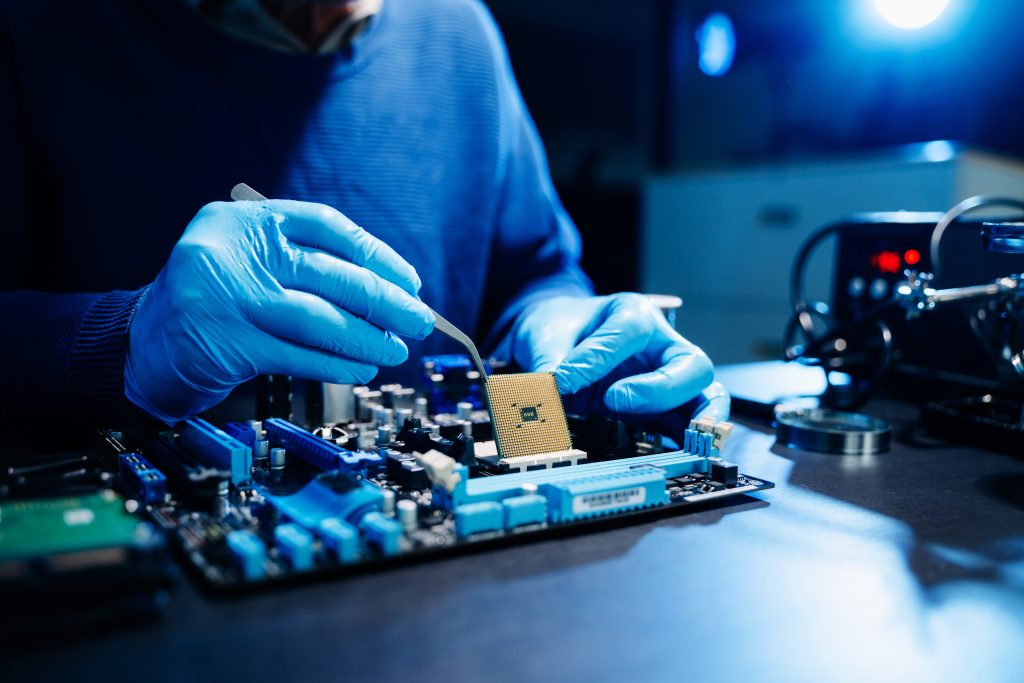
Many of the failed components identified during May were detected through External Visual Inspection (EVI), X-Ray analysis, Decapsulation & Die Inspection, and Functional Testing. Together, these methods provide a comprehensive view of both physical integrity and electrical performance, allowing defects to be identified before they become field failures.
Customers Continue to Invest in Deeper Verification
Testing demand also reveals how procurement strategies are evolving.

External Visual Inspection remained the most frequently requested service during May, reflecting the industry’s continued focus on identifying counterfeit components, resurfacing, and remarking before parts enter production.
At the same time, demand for X-Ray analysis, decapsulation, and functional testing remained exceptionally strong. This indicates that customers increasingly recognize that component authenticity cannot be confirmed by appearance alone. Internal construction, die characteristics, package integrity, and electrical performance have become equally important verification points, particularly when sourcing components through independent distribution channels.
As supply chains become more geographically diverse and procurement networks expand, comprehensive physical and electrical verification is rapidly becoming standard practice rather than an exception.
Memory and Power Devices Remain Under the Greatest Market Pressure
Memory devices represented the largest share of tested components during May, followed by power management devices, diodes, FPGAs, processors and microprocessors, MOSFETs, transistors, amplifiers, RF components, and capacitors.

These testing volumes closely mirror current market dynamics. Continued investment in AI data centers is driving exceptional demand for HBM and advanced DRAM technologies while reducing available manufacturing capacity for conventional memory products. At the same time, mature process technologies used for power management ICs and discrete devices remain capacity constrained.
As availability tightens, procurement teams increasingly turn to alternative sourcing channels—precisely where robust authentication and quality verification become most critical.
Which Manufacturers Are Customers Testing Most?
The distribution of tested components by manufacturer provides additional insight into current sourcing priorities.

Texas Instruments accounted for the largest share of submitted components during May, followed by Micron, Analog Devices, Nexperia, AMD, onsemi, NXP, Renesas, Diodes, Infineon, STMicroelectronics, and Microchip.
This distribution reflects current procurement activity rather than product quality. Manufacturers supplying memory, power management, analog, and embedded processing solutions continue to experience particularly strong demand as AI infrastructure, industrial automation, and high-performance computing applications expand. Consequently, organizations are increasingly seeking independent verification before deploying these components into production.
Failure Rankings Highlight Areas of Elevated Risk
Failure statistics from May indicate that several component categories deserve particular attention during sourcing activities.

Hard disk drive components and filters recorded the highest proportion of failed devices, followed by CPUs, isolated DC/DC converters, transceivers, systems-on-chip (SoCs), optocouplers, microprocessors, FPGAs, and RF/wireless components.
Although these technologies serve very different applications, they share similar market characteristics: limited availability, complex manufacturing processes, and elevated sourcing risk. For these categories, independent laboratory verification can significantly reduce procurement uncertainty and help prevent costly field failures.
Functional and Destructive Testing Continue to Expose Hidden Defects
Cross-section analysis and functional testing—including JTAG and DC Parametric Testing (DPT)—accounted for the largest share of detected failures during May.

Remarking verification and resurfacing analysis also identified a meaningful number of nonconforming components, reinforcing that counterfeit and refurbished devices remain a persistent concern throughout the electronics industry.
These findings illustrate an important reality: visual inspection alone cannot identify many of today’s most significant quality risks. Electrical characterization and destructive analytical techniques remain essential for uncovering performance degradation, internal defects, counterfeit indicators, and manufacturing anomalies that cannot be detected externally.
Manufacturer Failure Trends
Not all manufacturers exhibited the same proportion of failed inspections within the samples received during May.

Manufacturers appearing near the top of this month’s ranking showed a higher percentage of unacceptable test results among the submitted samples. However, these rankings should be interpreted carefully. They reflect only the components tested by White Horse Laboratories during the reporting period and are not intended as an overall assessment of any manufacturer’s product quality.
Instead, the data provides valuable insight into where procurement teams encountered elevated sourcing risk during May and reinforces the importance of independent testing regardless of component origin.
Key Takeaways for Procurement Teams
Based on May’s testing data, White Horse Laboratories recommends several best practices for organizations sourcing electronic components:
- Prioritize comprehensive verification for high-risk categories such as memory devices, power management ICs, processors, FPGAs, and RF components.
- Combine External Visual Inspection, X-Ray analysis, and functional electrical testing to achieve significantly greater confidence than any individual inspection method can provide.
- Diversify sourcing channels whenever possible while maintaining strict requirements for traceability and supplier qualification.
- Consider advanced analytical techniques such as decapsulation and failure analysis whenever component authenticity or long-term reliability is critical.
Looking Ahead
Although supply conditions continue to stabilize in certain market segments, geopolitical uncertainty, manufacturing capacity shifts, and counterfeit activity remain defining challenges throughout 2026.
For procurement organizations, proactive component verification continues to represent one of the most cost-effective strategies for reducing supply chain risk. Independent testing not only identifies defective or counterfeit devices before production but also provides the objective data needed to make informed sourcing decisions with greater confidence.
At White Horse Laboratories, our goal extends beyond identifying failures. We help customers understand emerging market trends, anticipate sourcing risks, and build more resilient electronics supply chains through independent, technically rigorous testing.