
EV and power assemblies fail when harness design, PCBA+ box-build integration, and test aren’t owned by one team. INDIC runs in-housewire & cable harnessing alongside your PCBAs and enclosures, proving fit (bend radius, strain relief, grommets), electrical integrity (continuity testing, hi-pot insulation), andsystem behavior (ICT/FCT/EOL)—all bound to serials in MES traceability.
SOURCE: INDIC Electronics Blog
The integration problem we solve (EV & power electronics)
Outsourced looms add hand-offs right when HV safety, EMI/grounding, and enclosure tolerances matter most. By keeping in-housewire & cable harnessing inside the PCBA+ box-build integration team, we shorten change cycles, aligns electrical + mechanical constraints early, and ships with clean evidence.
Five integration controls that de-risk EV builds
1) Mechanical fit first: bend radius, strain relief, service loops
We model harness routing before enclosure close-out: bend radius rules, grommets and strain relief, connector keying, and service loops for rework. This prevents pin damage, over-tight radii, and pull-outs in vibration/thermal cycling.
2) Electrical integrity: continuity testing & hi-pot insulation gates
Every loom sees continuity testing; HV families add hi-potinsulation checks. Interlock/HVIL loops, polarity, and ground paths are validated before final seal. Fail = rework at source, not in the field.
3) System tests that “know the harness”: ICT/FCT/EOL + JTAG
Boards mated to the harness run ICT(opens/shorts/values), boundary-scan JTAG for BGA interconnects, FCT with sensors/relays exercised, and EOL as the shipping gate. Tests include harness-specific nets(interlocks, sense lines) so coverage maps to real failure modes.
4) Identity that travels: OBP programming + MES traceability
We program on the line (OBP programming), bind firmware version/checksum to the unit, and store all results by serial in MES traceability. No-pass/no-ship blocks downstream movement; returns analysis is one query, not a hunt.
5) Changeovers without chaos (LVHM variants)
Kit integrity checks (inbound → line-side → first-article), label schemas, and torque/label/seal verifications keep variant swaps predictable. The same owner team controls loom, board, and enclosure changes.
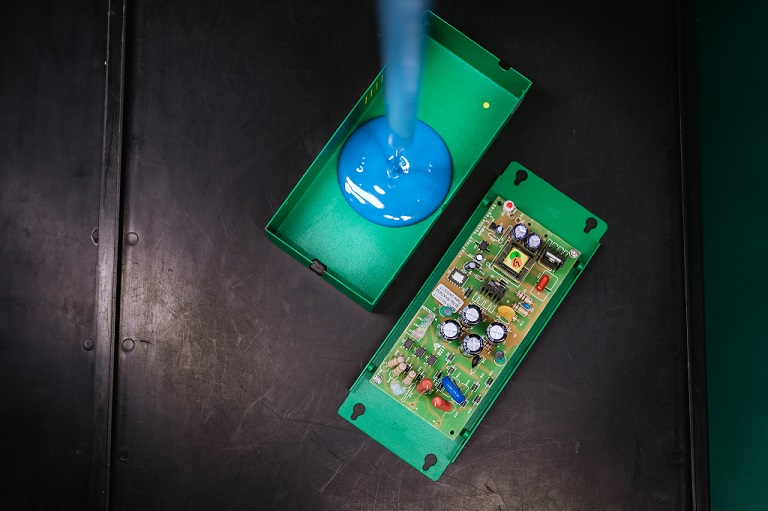
EV charger manufacturing: where harness integration moved the needle
- Goal. Ten chargers in five days for certification; legacy flow needed two weeks.
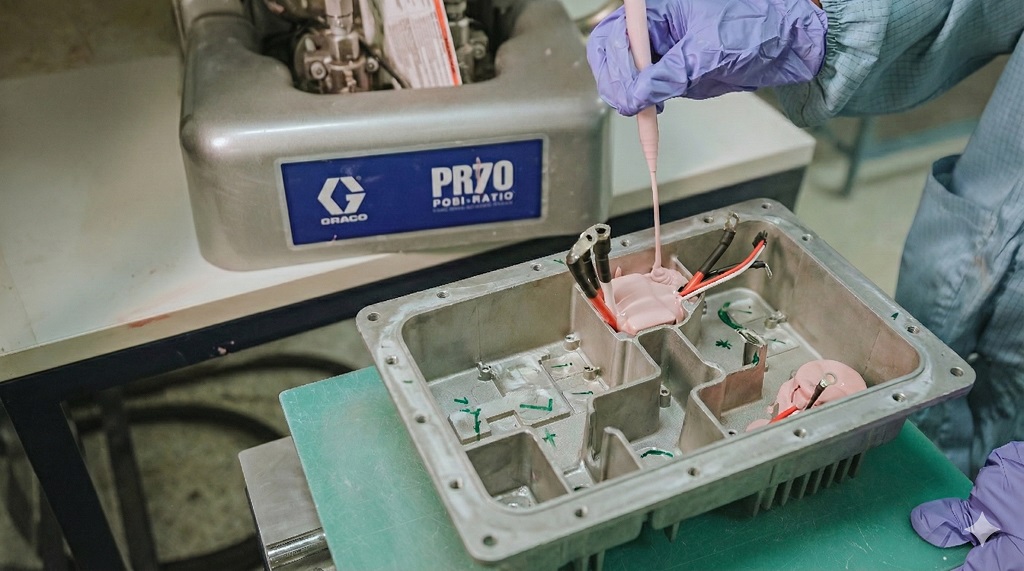
- What changed (harness-specific). Harness cut/terminate/label ran in step with box-build; cable entry points, grommets, and strain relief set before potting; interlock/ground continuity checked at sub-assembly; loom IDs tied to unit serials.
- Outcome. Four-day assembly cycle with Day-5 delivery, stable audits, and cleaner rework paths because harness + PCBA + box-build integration lived under one plan.
Metal vs. plastic enclosures: integration tactics that differ
- Metal enclosures (chargers/controllers).
Shielding/grounding strategy, busbar clearances, HV harness routing, and potting windows planned together; terminal torque + face protection verified at EOL. - Plastic sealed box-builds.
IP sealing paths, tie-downs, and bend radius rules prevent pinch and chafe; service labels and service loops keep maintenance realistic.
What you provide; what our EMS company returns for Wire & Cable Harnessing
You provide: connector series/pin maps, current and environment limits, enclosure drawings,board I/O, acceptance criteria.
INDIC returns: routed loom drawings with bend radius and strain relief, label schema, continuity/hi-pot plan, a harness-aware ICT/FCT/EOL coverage matrix, and a by-serial MES traceability template that links harness IDs to finished-goods serials.
Wire & Cable Harnessing for PCBA and Box-Build Integration – Bottom Line
Treat the loom as part of the product. With in-house wire & cable harnessing embedded in PCBA+ box-build integration, INDIC proves fit, verifies continuity testing/hi-pot insulation,and closes system risk through ICT/FCT/EOL+ OBP—all recorded in MES traceability. That’s how EV and power assemblies hit dates without yield surprises.
INDIC EMS Electronics has been a leading name in the electronics manufacturing industry since 2007, driven by a commitment to quality, innovation, and customer satisfaction. We specialize in providing electronic printed circuit board (PCB) assemblies and electronic products and accessories. Our cutting-edge facility, located in the IT hub of Bangalore, India, and in Barcelona, Spain, ensures top-notch production and delivery.