


By Philip Stoten
There is a moment in almost every conversation with a HANZA executive when the word “superpower” comes up. It is not the language of corporate boilerplate. It is the language of people who genuinely believe they have built something that nobody else has, and who have the numbers to back it up. You can see all four interviews on Youtube.
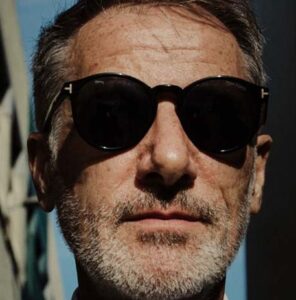
At HANZA’s Capital Markets Day earlier this month, that conviction was on full display. With revenues tracking at post-acquisition run-rate of 10 billion SEK and heading toward a target of 14 billion SEK by 2028, the landmark acquisition of BMK in Germany now bedding in, and a new three-year strategic phase underway. The Swedish contract manufacturer is making a credible case for a place among Europe’s elite. What makes the story interesting is not just the scale, but the method.
Turning The Clock Back
HANZA was founded by Erik Stanfors, who spent years on the other side of the outsourcing equation, as a customer, watching his supply chain fragment across dozens of suppliers scattered across the globe. The experience left him with a clear idea of what manufacturing should look like, and an equally clear sense of how far the industry had drifted from it.
“When I was a child, visiting Ericsson factories, they were vertically integrated,” Stanfors recalled. “Then outsourcing began, and globalization scattered everything. I think I’m just turning the clock back, but how manufacturing should be done.”
That instinct became HANZA’s founding architecture. Rather than competing as a pure-play PCBA house or a specialist in any single technology, HANZA built clusters, regional manufacturing hubs capable of delivering mechanics, heavy metalwork, sheet metal, cable harnesses, electronics, and assembly in close proximity. It is a model that Mattias Lindhe, Chief Strategy Officer, describes without hesitation as a superpower. “We are the only company that I see hold that superpower in terms of vertical integration,” he said. “We can basically take any technology and reverse engineer that into full assembly, full manufacturing, whether we start with mechanics, cables, or electronics.”
The Three-Year Machine
What distinguishes HANZA from other ambitious EMS players is not just the model, but the discipline with which it has been executed. Since the company’s early years, strategy has been organized around three-year phases, each designed to advance the business along one of three axes: geography, capability, and capacity.
HANZA 2025, the phase that concluded at the end of last year, was defined by ‘Balance’, ensuring that each cluster reached comparable scale and capability, with acquisition playing a central role in that effort. By the end of the phase, HANZA had grown significantly, with the acquisition of BMK, a major German electronics manufacturer, representing the most significant single move.
The new phase, HANZA 2028, shifts the axis. “HANZA 2025 was all about capacity,” Stanfors explained. “The new phase is about adding technologies.” Andreas Nodin, Chief Operating Officer, elaborated on what that means in practice: listening carefully to what customers are requesting in quotes and conversations, then expanding capability in response. A seventh or eighth core technology may be added to the current six. Sub-technologies beneath those will also be evaluated. Nothing will be added speculatively. Everything will start from a customer need.
Manufacturing Made Easy
The clearest expression of the HANZA philosophy is a project that has become something of an internal benchmark: the Mitsubishi forklift account. When Mitsubishi approached HANZA, it was managing approximately 40 separate suppliers across its manufacturing supply chain. HANZA consolidated that relationship into a single point of contact, taking on not just production but logistics, coordination, and the full complexity of the supply chain on the customer’s behalf.
The result is captured neatly in a scenario Nodin described: “Volume goes up 20%? One phone call to HANZA. Before, that was 40 phone calls, and then you still had to coordinate all of them.” It is a simple illustration, but it captures the essence of what HANZA calls “Manufacturing Made Easy”, and why the company believes its model creates value that goes well beyond the unit economics of contract manufacturing.
Lindhe, who leads the company’s strategic development including the new Lynx defense program, placed this supply chain advisory capability alongside vertical integration as HANZA’s second superpower. “Any supply chain benefits from a solid, deep understanding, rewiring, reducing tied-up capital, increasing flexibility, improving on-time delivery,” he said. “The advisory services HANZA can provide: if vertical integration is our first superpower, that is the second.”
The BMK Effect
The acquisition of BMK brings HANZA into Germany in a meaningful way, and it does so without significant overlap. Where HANZA’s existing cluster model was built predominantly around mechanical manufacturing, BMK is one of Germany’s largest electronics specialists, with around 400 customers who know the company for its PCBA capability.
Florian Weiss, a member of BMK’s management board, described the combination as genuinely complementary. “HANZA was focusing more on mechanics, but they have the same model, outsourcing, consolidation. Together, we can go to our customer base and offer not just electronics, but sheet metal, mechanics, cable harnesses, and different regional footprints.”
The cross-selling opportunity is substantial. BMK customers who have little mechanical volume today may have significant demand that HANZA can now address. HANZA’s existing customers gain access to BMK’s electronics depth and German market presence. Weiss put it plainly: “We have just made BMK even better.”
The integration, Nodin emphasized, is being approached with deliberate humility. “Stay humble, listen, and don’t presume that what we are doing is the best,” he said. BMK’s quality record, measured in parts per million, is something HANZA intends to study and learn from, not simply absorb.
The North Star
Across five conversations at the Capital Markets Day, one theme recurred with enough consistency to feel like genuine organizational culture rather than talking points: the customer as the ultimate guide.
Lars Åkerblom, Chief Financial Officer, articulated it in the context of acquisition strategy. “We can never forget that it is the customer that needs to be satisfied,” he said. “Customers need to think that HANZA, after this or any acquisition, is actually a better supplier than it was before.” Unprofitable or misaligned customer relationships, he noted, have been actively managed out, because climbing the value chain together with the right customers is what drives margin improvement for both parties.
Stenfors, reflecting on his own experience as a customer years ago, brought it back to something more personal. “I was not that laid back, it was real pressure. If we don’t get deliveries, we will be out of business. You give your baby to somebody, and it’s so vital.” It was that experience, he said, that drove him to build the company he would have wanted to buy from.
That might be the most honest articulation of Manufacturing Made Easy there is. Not a slogan, but a memory, and a standard that HANZA, several phases in, is still building toward.
—
Philip Stoten is a journalist, podcast host, and Principal of SCOOP Events, specializing in the global electronics manufacturing industry. He hosts the EMS@C-Level podcast. You can see all four interviews on Youtube.