

How EMS Leaders Are Solving Manufacturing’s Greatest Challenge
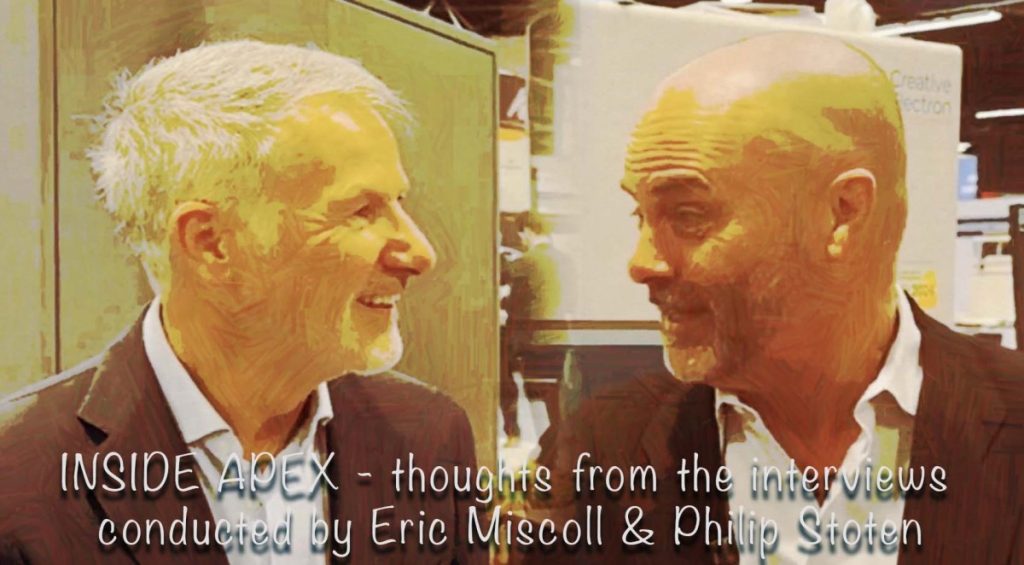
By Philip Stoten and Eric Miscoll
At APEX 2025 electronics manufacturing executives gathered to discuss their industry’s most pressing issues. While tariffs and geopolitical tensions dominated many conversations, one challenge consistently emerged as fundamental to future success: talent acquisition and development.
The Demographic Reality – A Silver Tsunami
The electronics manufacturing sector faces a stark demographic reality in North America and Europe with an aging workforce and insufficient young talent.
“Connecticut’s GDP is growing, mostly through Aerospace Alley, but our manufacturing employee base is shrinking,” explains Nicole Russo, CEO of Microboard. This contradiction illustrates the productivity imperative driving automation investments.
India presents a striking contrast. “More than 60-65% of the population is in the age group of 25 to 45,” notes Vivek Khanna, Managing Director of Indic EMS, highlighting the fundamental differences that exist between different geographies.
Culture as Competitive Advantage
EMS executives emphasized that creating the right culture has become their most potent tool for attracting and retaining talent.
“We give them an opportunity for growth. We give them an opportunity to really be able to participate, whether it fits additional schooling, being able to have a great environment,” explains Abel Castillo, Director of Sales at Aimtron.
Jay Patel, CEO of Amtech, makes the connection explicit: “If you don’t have a strong culture, there’s no other magic bullet. Our competitive advantage is not the gear that we have. It is the culture that we build and the people that we have.”
Catherine Sherman of the McGuckin Group reinforces this: “It’s not just finding the right people in the marketplace, it’s how do I win them over to my side? And is money really the only factor? The answer is no.”
Gender Diversity as Strategy
Several EMS leaders are discovering that gender diversity isn’t just a social responsibility but a strategic advantage. Perhaps the most striking example comes from Indic EMS in India.
“Indic has a uniqueness in having an 80 percent female team from a production perspective, working single shifts,” explains Indic EMS MD Vivek Khanna. This approach isn’t merely about meeting diversity targets – it’s a core part of their operational strategy.
Education Initiatives: The Apprenticeship Renaissance
With traditional education pipelines proving insufficient, manufacturers are increasingly developing their own talent solutions.
“We will pay for any school, any course, that they want to go to that supports our business,” explains Patrick Stimpert of Matric Group. He has observed a fundamental shift in young workers’ educational preferences: “The young kids coming through have given up on college. They don’t want that four-year delay in moving on with their lives and they don’t want to carry that huge debt.”
Forward-thinking manufacturers are creating their own pathways: “We have to teach them everything anyway, so we might as well just create our own school, our own programming, our own career development ladders.” concludes Patrick.
Automation: Multiplying Human Potential
The industry’s approach to automation is evolving from labor replacement to talent enhancement. Nicole Russo articulates this shift: “The way we’re doing that is automation.”
Allison Budvarson of Out of the Box Manufacturing explains: “I don’t think that it would be the same headcount, but I do think that we would be able to do more while hiring less semi-skilled potentially, or being able to more quickly grow from within.”
Cross-Generational Integration
Several executives identified generational differences as a significant workplace challenge. Chris Denney of Worthington Assembly highlighted: “What are the values of somebody who’s in their 60s versus the values of somebody who’s 25 years old? And how do you make your work environment a great place for all of these people?”
Sean Niell of Vexos emphasized the importance of communication that resonates across demographic divides: “The key is making sure you’re clear on your strategy and hitting key points of each of those elements – cultural and age demographics – because people will pick up the words that mean something to them.”
Leadership Strategy Integration
Audrey McGuckin of the McGuckin Group, who keynote and led a talent workshop at IPC’s Leadership Summit, emphasized that talent strategies must align with business objectives: “We always like to start with strategy—what are you trying to do and how are you expecting to get there? And, on the basis of that, what is it going to take from a leadership perspective?”
The Leadership Multiplier Effect
When leadership creates the right environment, talent development becomes self-sustaining. Patrick Stimpert captures this effect: “What I’m really excited about is, this time around there’s been that buy-in culture to it and so I’m not having to do it all, and I love that part of it.”
Conclusion: The Talent Imperative
The conversations at APEX 2025 revealed that talent has become the defining, even existential, challenge for electronics manufacturers. The companies that thrive will be those that reimagine talent acquisition, development, and retention as core strategic functions.
For electronics manufacturers navigating an increasingly complex landscape of technological change, geopolitical tension, and economic uncertainty, getting talent right isn’t just one priority among many—it’s the foundation upon which all other success depends.
Industry Leaders Quoted in This Article
- Nicole Russo – CEO, Microboard
- Vivek Khanna – Managing Director, Indic EMS
- Abel Castillo – Director of Sales, Aimtron
- Jay Patel – CEO, Amtech
- Patrick Stimpert – Vice President of Operations, Matric Group
- Allison Budvarson – COO, Out of the Box Manufacturing
- Chris Denney – CTO, Worthington Assembly
- Sean Niell – General Manager, Vexos
- Audrey McGuckin – CEO, McGuckin Group
- Catherine Sherman – McGuckin Group
Industry Leaders Quoted in This Article – watch the full interviews on the SCOOP YouTube channel