


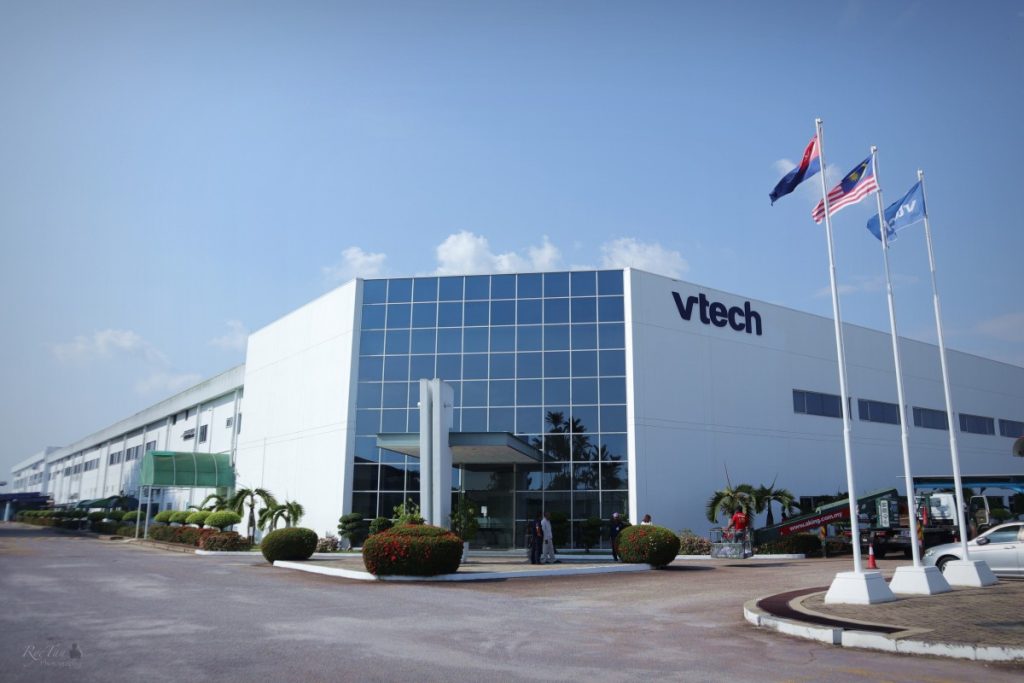
EMSNOW visited the VTech CMS facility in Johor Malaysia in November of 2024 where Eric met with the Managing Director, SL Ng, and toured the facility to view the operations. (Profile of Malaysia facility). SL Ng is a Malaysian citizen who was working for VTech in China when VTech acquired this facility in 2018. He was offered the opportunity to return home and manage the facility, an opportunity he gladly accepted. With all the geopolitical upheaval and related tariff wars currently challenging global trade and the EMS industry, we thought it an opportune time to speak again with SL to get an update on his operations and the impact tariffs are having on business in Malaysia.
EMSNOW: Please give a brief overview of the history of your facility and its current operations.

SL Ng: VTech Malaysia was formerly the manufacturing facility of Pioneer Corporations, which was one of the major audio-visual equipment manufacturers from Japan. VTech acquired the facility in August 2018 and since then we expanded the facility with a new building in addition to the existing one. Currently, we are operating on a total factory build-up of 30,000 sq. meters.
In terms of capabilities, we are fully equipped to provide full turnkey EMS services, ranging from new product introduction, order processing, materials procurement, PCBA and box build assemblies as well as logistic arrangement for product shipping. Since the COVID-19 pandemic ended, we have upgraded the equipment capabilities for the Malaysian site. That includes almost all of the PCB assembly equipment for the SMT and wave soldering processes. We also brought in the automation technology from our sister factory in China for the box build assembly. That includes core process automation such as automated screw fastening as well as robotic arm application for certain high running assembly lines.
Today, we are serving Customers around the world. Our major product segment is Professional Audio which includes DJ equipment. Other segments are Hearables, Internet of Things, LED Lighting, Home Appliance and Industrial Products. We are shipping 50% of the products made here to North America, 35% to Europe, and 13% to Asia Pacific.
EMSNOW: I recall from my visit that you are expanding the facilities there. What is being added and what is the status on when this will open?
SL Ng: That’s correct. It was really exciting to show you the actual construction progress of the site expansion during your last visit. As you have witnessed on site, we are currently building a new warehouse of 6,000 sq. meters with 5-layer VNA (Very Narrow Aisle) racking system. We are on track to commence the new warehouse to be fully operational in September 2025. With that, we would be able to increase our manufacturing capacity by another 30%, after converting the existing warehouse into a production floor.
In addition to the new warehouse, we are currently planning to construct a new factory building of around 30,000 sq. meters adjacent to the new warehouse. The construction is expected to take up to 18 months and upon completion, it would increase the total manufacturing capacity of our Malaysian facility by another one-fold.
EMSNOW: There has been a shift in the electronics manufacturing industry towards out of China solutions. What are you seeing? What is driving it?
SL Ng: Since the trade war between the US and China started back in 2019, we have been seeing diversification of the electronics manufacturing base switching from China to the countries in Southeast Asia such as Malaysia, Vietnam and Thailand. Beside the trade conflict, after the COVID-19 pandemic, many companies now are adopting “China +1” strategies to avoid over-reliance on one country. The pandemic exposed the vulnerabilities in China-centric supply chains during the lockdowns, which led to port congestion and delays of shipment from China.
Countries in Southeast Asia such as Malaysia have emerged as the alternative to manufacturing in China due to relatively lower labour costs as compared to other regions, favourable trade policies, and government incentives to foreign investment. Fortunately, we are proud to say that since the start of the trade war, VTech has been able to provide the alternative of manufacturing outside China to our customers with the timely establishment of VTech Malaysia.
Of course, relocating the manufacturing base from China and establishing regional supply chains outside China may increase the manufacturing cost of the electronics products. However, it is necessary to do so under the current business environment in exchange for more predictable supply chain resilience and reduced geopolitical risk.
EMSNOW: What impact are tariffs from the USA having on your business in Malaysia?
SL Ng: On the 2nd of April, the US announced a 24% reciprocal tariff on imports from Malaysia. Subsequently on the 9th of April, the US announced a 90-days pause of the tariff and the baseline 10% tariff was applied instead. The Government of Malaysia has ruled out imposing retaliatory tariff, and the trade minister will be going to the US at the end of this month to discuss and hopefully they will be able to negotiate down the tariff imposed on Malaysia.
However, the reciprocal tariff imposed on Malaysia, which is 24%, is relatively lower as compared to other countries in Southeast Asia. Such as 46% for Vietnam, 37% for Thailand, 32% for Indonesia. For this reason, we are receiving more requests from our existing customers, and also some new customers to switch their manufacturing site for their products, to be shipped to the US from our facility in Malaysia.
Enough said and to answer your question, at least at this moment, we are expecting an increase in orders for Malaysia in the short term. But of course, it is difficult to predict if the US tariffs will trigger global economic slowdown, which definitely would also affect Malaysia businesses in the longer term given that scenario.
EMSNOW: The EMS industry has a long history of manufacturing in Malaysia. How would you characterize the current state of the EMS industry there? What are the benefits and challenges?
SL Ng: Malaysia has long been a global hub for Electronics Manufacturing Services (EMS) since the 1970s, driven by the country’s industrialization and economic development policies. Many Multinational Corporations and EMS companies have long established their manufacturing footprint in Malaysia.
Several market analysis reports indicate that the global EMS market is projected to grow at a CAGR of between 4 – 6% in the next few years. In line with this trend, and Malaysia being the hot spot for electronics manufacturing, the EMS industry in Malaysia is expected to expand in the next few years.
This is evidenced by the full occupancy of industrial areas especially in Penang, and recently the price of industrial land in Malaysia generally has gone up significantly.
EMSNOW: What are the benefits for EMS in Malaysia?
SL Ng: Some key factors behind the success of Malaysian EMS industry include:
- First of all, its location along the Straits of Malacca, which is the busiest shipping lane in the world.
- Secondly, Malaysia is politically stable with neutral and trade friendly government policy
- Thirdly, its robust infrastructure, whereby Free Trade Zones and Industry Parks are well connected to major international seaports and airports by the highways.
- Next, its skilled and technical workforce for electronics manufacturing, trained over half a century by the global EMS companies such as Flextronics and Jabil.
- Also, it has an established EMS Supply Chain ecosystem for both electronics components and mechanical parts.
The manufacturing cost in Malaysia is still considered among the lowest in the world. One unique benefit is its multiracial and diversified cultures with a good mix from the East and West. As a result, Malaysians are more considerate, tolerant, understanding to their business partners, and well versed in English and Chinese languages. The close proximity to Singapore also puts the manufacturing site of VTech Malaysia in a favourable position. The implementation of Johor and Singapore Special Economy Zone, intended to mimic the success of Hong Kong and Shenzhen SEZ, was approved mutually by Malaysia and Singapore and has affirmed Malaysia as a viable alternative to China manufacturing. Malaysia is free from natural disasters such as earthquake, volcano and typhoons. Last, but not least, as mentioned earlier, the recent reciprocal tariff imposed on Malaysia at 24% is still considered much lower as compared to other countries in Southeast Asia.
EMSNOW: What are the challenges facing the EMS industry in Malaysia?
SL Ng: Some challenges facing the EMS industry in Malaysia include the tight labour supply, which is always the number one issue with the Multinational Corporations committed to set up their manufacturing in Malaysia. As the demand for EMS increases for Malaysia, the labour supply in Malaysia will become much tighter. To counter this, VTech Malaysia hires foreign workers from Indonesia to compensate the shortage from the local manpower pool. Besides, VTech Malaysia is intensifying the automation development to reduce the dependency on the direct labour by leveraging the knowhow and technology from VTech China.
Secondly, the costs of manufacturing are rising. The minimum wage has increased by 70% in the past 5 years along with the increase in electricity and logistic costs as the Malaysian Government is rationalizing the subsidy on energy commodities.
The last, but not least challenge is the expectation of most of the EMS customers to maintain the Chinese efficiency and costs after transferring the manufacturing to Malaysia. Fortunately, VTech Malaysia is able to leverage the materials pricing and manufacturing knowhow of VTech China which allows us to keep our pricing competitive if not equivalent after offshoring from China.
EMSNOW: What is your opinion on the future of the EMS industry in Malaysia in 2025 and beyond?
SL Ng: As you may already tell, the future of EMS industry in Malaysia is bright given the facts that I outlined earlier. From official reports, the EMS industry in Malaysia is expected to grow significantly in 2025 and beyond. Given the current scenario of escalating trade tension between USA-China and again the fact that the reciprocal tariffs imposed on Malaysia is relatively lower among its regional peers, the Malaysian EMS industry will continue to be a prime beneficiary amid current global supply chain shifts.
Another telling situation is that we are seeing more and more second tier EMS suppliers shifting their manufacturing base from China to Malaysia, in line with more EMS businesses being shifted to Malaysia.
EMSNOW: SL, thank you for taking the time to provide this update on VTech CMS in Malaysia. I wish you continued success with your operations there.
SL Ng: Thank you so much Eric.